2026 – European DOHaD Conference
- Home
- Terms & Conditions
- 2026 – European DOHaD Conference
2026 – European DOHaD Conference
PROGRAM
To be annouced soon!
Confirmed Speakers
| Name | Session | Country |
| Prof. Keith Godfrey | Keynote lecture | United Kingdom |
| Prof. Christine Heim | Adverse childhood experiences, neurodevelopment and life course health | Germany |
| Prof. Tim Nawrot | Environmental pollutants, toxins, and climate change: Impact on disease susceptibility. | Belgium |
| Dr. Michael Penkler | Social, cultural and political aspects: Implications for DOHaD research | Austria |
| Prof. Fatimi Crispi | Pregnancy disorders and placentation in the context of maternal and offspring health. | Spain |
| Prof. Petter Brodin | Evidence from the life sciences: What can we learn about DOHaD mechanisms? | Sweden |
| Prof. Luca Chiapperino | The relationship between DOHaD, public health and health policy. | Switzerland |
- Sessions
- Session 1 – Adverse childhood experiences, neurodevelopment and life course health.
- Session 2 – Environmental pollutants, toxins, and climate change: Impact on disease susceptibility.
- Session 3 – Social, cultural and political aspects: Implications for DOHaD research.
- Session 4 – Sex and gender differences in early life and adolescence.
- Session 5 – Pregnancy disorders and placentation in the context of maternal and offspring health.
- Session 6 – Evidence from the life sciences: What can we learn about DOHaD mechanisms?
- Session 7 – Modifiable factors and interventions for improving long term health.
- Session 8 – The relationship between DOHaD, public health and health policy.
- Extra-activities:
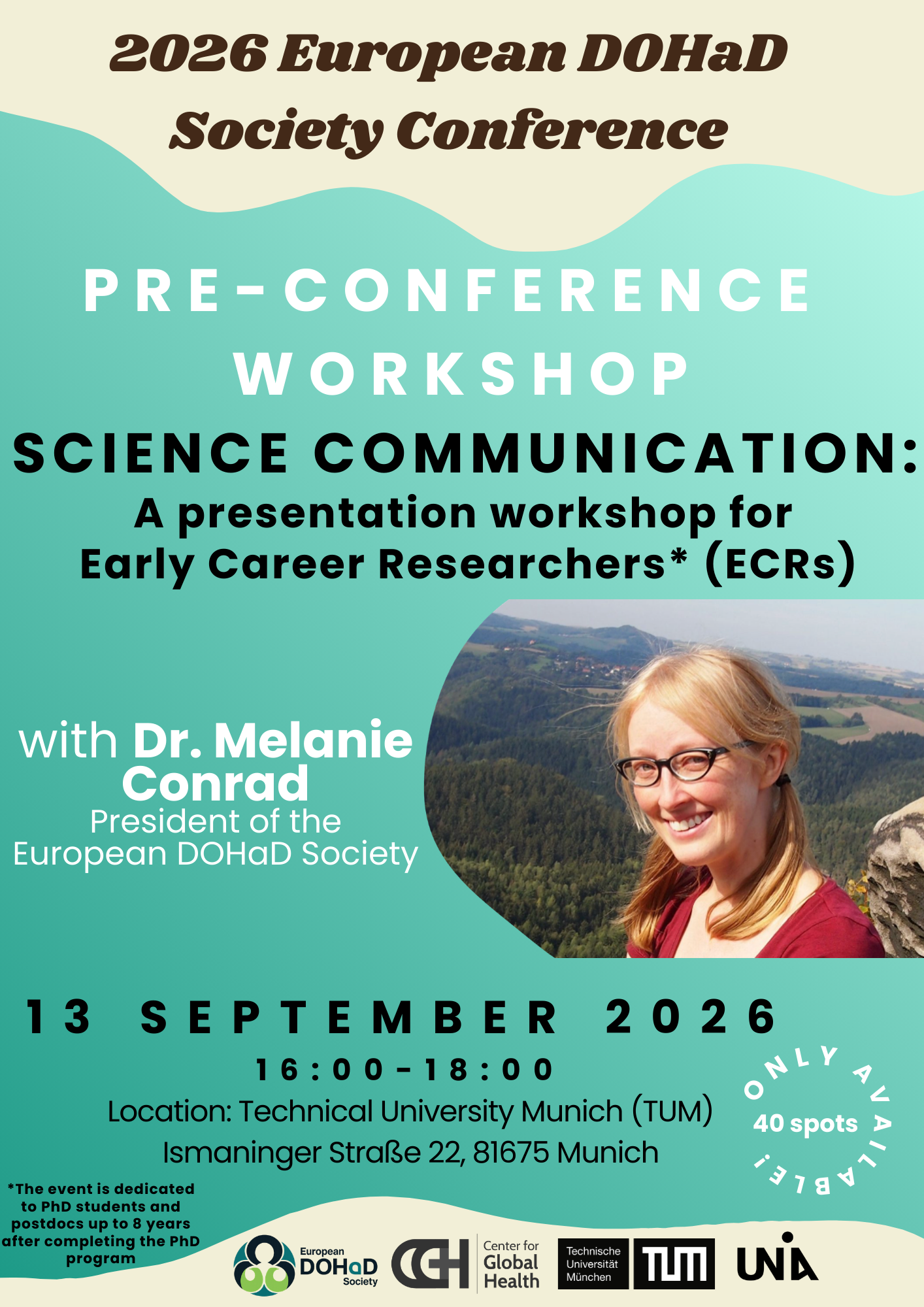
- ECRs Science Communication pre-conference workshop : Sunday September 13th from 16:00-18:00
- ECR Networking: Sunday September 13th from 19:00
ORGANIZING COMMITTEE

Clarissa Prazeres da Costa

Fabian B. Fahlbusch

Melanie Conrad

Marlou de Kroon

Amanda-Sferruzzi Perri

Julie Nihouarn-Sigurdardottir

Hani Harb

Jorge Lopez-Tello

Magdalena Klimek
LOCATION
Location:Â
Travel to Munich:Â Munich is easily accessible from all major international and European destinations. Munich International Airport (MUC) offers numerous direct flights worldwide and is efficiently connected to the city center by suburban train (S-Bahn), with a travel time of approximately 40 minutes.
For those traveling by rail, Munich Central Station (Hauptbahnhof) provides high-speed and direct connections to cities across Germany and Europe. Munich is also well connected by an extensive motorway network, ensuring convenient access by car.
Accommodation: Since Octoberfest starts on September 19th, we suggest that you book your accommodation early!
VENUE
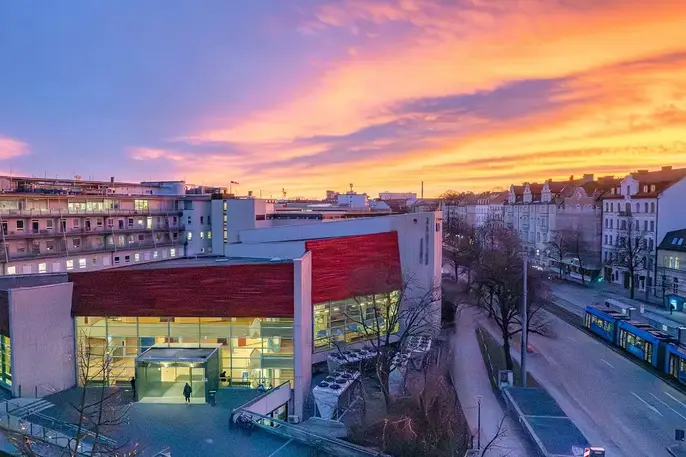
Klinikum der Technischen Universität München (TUM Klinikum). Ismaninger Straße 22, 81675 München (Germany)TRAVEL TO MUNICH
Munich is easily accessible from all major international and European destinations.
Munich International Airport (MUC) offers numerous direct flights worldwide and is
efficiently connected to the city center by suburban train (S-Bahn), with a travel time
of approximately 40 minutes.
For those traveling by rail, Munich Central Station (Hauptbahnhof) provides high-
speed and direct connections to cities across Germany and Europe. Munich is also
well connected by an extensive motorway network, ensuring convenient access by
car.ACCOMMODATION
Since Octoberfest starts on September 19th, we suggest that you book your
accommodation early!
CONTACT
Europan DOHaD Society Office
Charité Universitätzmedizin Berlin, Institute for Microbiology, Infectious Diseases and
Immunology Hindenburgdamm 30 12203 Berlin Germany
Questions may be directed to: eds.info@dohadsoc.org
Follow us on social media for the latest info!